The Platform
Intelligence built into the telemetry stream
Octane connects to your vehicles' OBD ports and runs three parallel analysis pipelines: anomaly detection, consumption forecasting, and refill scheduling. All from a single hardware installation per vehicle.

Every fuel anomaly gets an analysis window
When tank level drops faster than consumption models predict, Octane opens an analysis window. Engine RPM, vehicle speed, GPS position, and door sensor data are cross-referenced against the drop rate and duration. Legitimate events (engine-load spikes on inclines, sensor recalibration) are classified separately from anomalous events.
Alerts include event time, estimated volume, vehicle ID, and GPS coordinates. The detection pipeline processes each frame within 30 seconds of receipt.
See It in ActionA 30-day number you can defend in a budget meeting
Octane builds a consumption model for each vehicle using actual telemetry: daily distance, average engine load, idle time, and fuel-efficiency by route type. The 30-day forecast is recalculated nightly as new data arrives.
Unlike flat percentage adjustments, the per-vehicle model adapts to fleet composition changes, route reassignments, and seasonal load patterns. Finance gets a line item per vehicle, not a single fleet total.
Learn More24-hour visibility into your fleet's refueling needs
Octane calculates each vehicle's refill window based on current tank level, tomorrow's scheduled routes, and approved station locations. The result is a day-ahead schedule dispatchers can act on, not a reactive alert when the gauge hits reserve.
Refill windows are recalculated each evening. Drivers receive their scheduled stops; dispatch sees the full fleet view alongside estimated costs per stop.
Request a Demo| Vehicle | Window | Station | Est. Fill | Status |
|---|---|---|---|---|
| TRK-4471 | 07:00 - 09:00 | Cairo Ring Rd S3 | 55 L | Confirmed |
| TRK-2204 | 09:30 - 11:00 | 6th October North | 42 L | Confirmed |
| TRK-3819 | 12:00 - 14:00 | Giza Sq. Depot | 68 L | Pending |
| TRK-1130 | 14:30 - 16:00 | Smart Village Gate 2 | 38 L | Confirmed |
| TRK-5502 | 17:00 - 18:30 | Cairo Ring Rd S3 | 61 L | Pending |
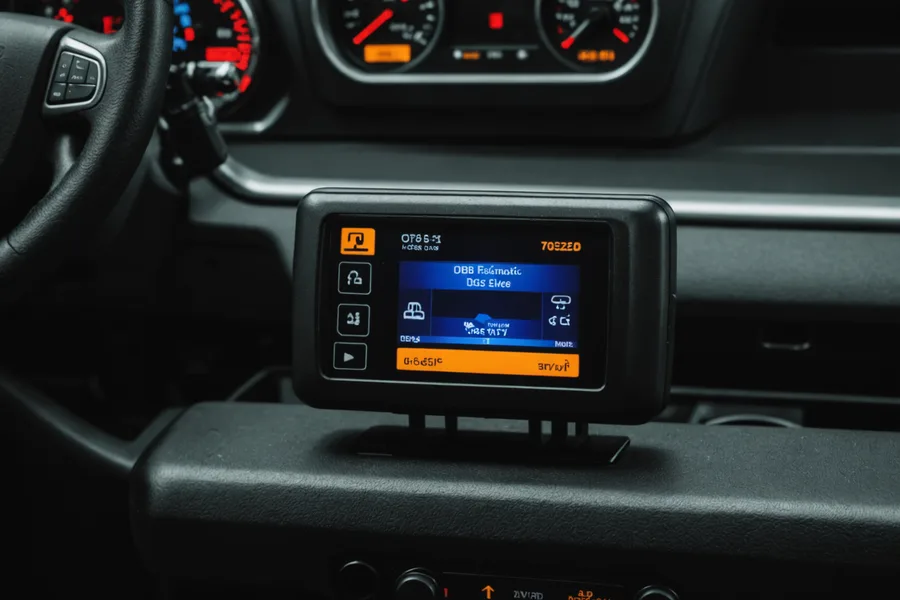
Hardware
OBD-II plug-in reader with 4G-LTE cellular module. Captures fuel level, RPM, speed, coolant temp, and GPS at 10-second intervals. Operating range -20C to +65C. Draws under 150mA at 12V.
Data pipeline
Frames transmitted to regional edge nodes over HTTPS with AES-256 encryption. Detection pipeline median latency under 30 seconds end-to-end. Buffered upload for low-connectivity zones with out-of-order frame reconciliation.
Integrations
REST API with webhook support for alert dispatch. Native integration with common fleet management systems available. CSV export for finance and accounting workflows. Role-based access for fleet managers, dispatchers, and analysts.
Vehicle compatibility
Octane works with any OBD-II equipped vehicle. Commercial trucks, vans, and utility vehicles manufactured after 2008 are supported out of the box.
All vehicles require OBD-II compliance (2008 or newer in Egypt). Contact our team to verify compatibility for specialized vehicles or older models with third-party OBD adapters.
Get your fleet connected
Talk to our team about hardware provisioning, system configuration, and integration with your current dispatch workflow.